Saturday, 26 March 2016

The Big Questions: Tips on Building a Fantasy World by Daniel Swensen #ChaBooCha


The Big Questions: Tips on Building a Fantasy World
by Daniel Swensen

Escaping to other times and places is one of the great appeals of fantasy. Fiction allows us to imagine and embrace the impossible, to dwell in worlds that defy reality and flaunt physical laws. As readers, we can lose ourselves in fictional history and immerse ourselves in nonexistent cultures. But as authors, creating a fantasy world from scratch can be an intimidating (and time-consuming) task. Where do you begin -- and where does it all end?

I don’t pretend to have all the answers, because I don’t think there’s any One True Way to build a fantasy world. The secret lies in finding an approach that works for you, experimenting with it, and not being afraid to change things up when you hit a wall. (Actually, I think that’s the secret to solving most writing ills, and it’s not much of a secret because that’s what I tell anyone whenever they ask).

Still, I’ve learned a few things in my twenty-plus years of building fantasy worlds for gaming and fiction. Here are a few tips to get you started on building a great, original fantasy world.

Ask the Big Questions

In my experience, the best first question to ask yourself when world-building is: how does this world differ from ours? If you’re creating a fantasy world that’s familiar but unlike our own (such as the pseudo-European-medieval setting that characterizes most epic fantasy), ask yourself how this world differs from those everyone has seen before.

This will inform many of the decisions that follow, and help you focus on the things that matter. No one really cares about how your world is the same. The appeal lies in the big differences and the little details.

You might  start with the broad strokes:

     A world like ours, but vampires and werewolves are real (Twilight, a whole lot of urban fantasy)
     A fantasy world with elves, dwarves, and dragons (Lord of the Rings, a whole lot of traditional fantasy)
     A faraway galaxy populated with aliens, galactic empires and advanced technology (space opera a la Star Wars)

Your question could also take the form of a “what if:”

     What if magic was real but hidden from the public? (Harry Potter)
     What if the universe was ruled by indifferent alien gods? (H.P. Lovecraft’s mythos)

The next big question might be: how do the differences affect the characters? The answer will vary depending on your chosen setting. A single big “what if” question can fuel an entire book or series. A world where magic is a hidden secret might not affect the majority of the population; a world where water is nearly nonexistent, or where people mysteriously float into space when they fall asleep, will affect everybody in big, impossible-to-ignore ways.

The bigger the “what ifs” (and the more of them you have), the more ambitious your world-building will be. The answers to these questions will likely shape the culture and history of your world.

Choose Your Approach

Now that you’ve picked a direction, it’s time to decide which way you want to build your world: from the top down, or from the bottom up.

A top-down approach means you build all the big questions and answers into your world-building on the macro scale. With this approach, you might write up history, outline major events of the past, draw maps, create figures of history and legend, and detail their lives. You’ll do this before you even get to your main characters and their story.

The background you create may never explicitly come into play in your prose, but it can inform character and narrative in rich, subtle ways. A great example of this is Lord of the Rings, the gold standard for detailed, voluminous history. You can read and enjoy The Hobbit and Lord of the Rings without knowing the details of The Silmarillion or the copious appendices -- but it deepens the experience if you do.

Advantages:
     You’ll have lots of rich, detailed history to draw on (once you’re finished)
     Material you don’t use can fuel future books or side projects.
     It can be a rewarding pastime on its own.

Drawbacks:
     It’s a lot of work (and a lot of time spent not writing your book).
     You may create material you’ll never use.
     The temptation to bloat your prose with historical details you spent so much time on can be huge.

A bottom-up approach starts with the characters and events you’re writing about right now. With this approach, you don’t write the history of the world and details about events happening far away. You only build as much world as you need, and you create the world as it becomes necessary. Faraway lands and past events can remain mysterious and undefined until you need them. This approach works best for stories that focus on character, or for what-if questions that are specific and localized.

Advantages:
     It’s faster than the top-down approach.
     Only build as much world as you need.
     This approach lets you stay focused on character and story.

Drawbacks:
     You’ll have to take good notes to avoid inconsistencies and contradictions.
     You might have more work to do in revisions (depending on how good you were at taking notes).
     Flaws and weaknesses in your fantasy world might reveal themselves as you write (this is not necessarily a bad thing).

Get Inspired (and Steal from the Best) 

Building up a fantasy world can be a blast -- but it can also be a lot of work, and (just as with writing prose), it’s possible to hit a wall and lose your inspiration. Don’t worry when this happens -- there’s a bottomless well of inspiration for you to draw from.

Here are a few things you can try if you’re feeling uninspired:

     Look at other fictional worlds (I like the Dictionary of Imaginary Places).
     Read creation myths, or brush up on your myths and legends.
     Fire up Google Earth and look at the architecture and geography of faraway places.
     Watch a good historical documentary (these can be great for generating what-if questions)
     Feast your eyes on some great fantasy art (Pinterest is a great place to begin).

Most of all, have a good time building your world -- if you find it fascinating and fun to build, chances are your readers will have a great time exploring it.

*****


Daniel Swensen is a career freelance writer and fantasy author who lives in Montana with his wife and two spoiled cats. Orison, his first novel, was published by Nine Muse Press in 2014.

*****
Give-away


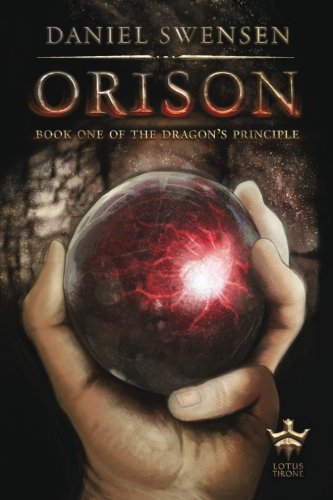
Today's give-away is a copy of the book Orison by Daniel Swensen. If you are a signed-up member of ChaBooCha, all you need to do to be entered into the drawing for this book is comment on this blog post. Winners will be selected from a random number generator on March 31st at noon (GMT).


Thursday, 24 March 2016

Characters You Crave to Know by C. Hope Clark #ChaBooCha


Characters You Crave to Know
by C. Hope Clark

Remember that character you fell in love with a long time ago? The one you wanted to be friends with, live with, maybe even marry? Without the author’s adept touch at developing that character, you might’ve skimmed over him, or skipped him when he spoke, or not read the book altogether.

Writing three-dimensional characters is intentional, not accidental, and you don’t just start writing in hope you make them appeal to a reader. So, what steps can you take to infuse color and style into your characters to make them memorable, and entice a reader to want more of your talent?

1)      Create a bible.
List your characters, each on a page or in his own column on a spreadsheet, and note every defining item you could imagine: height, weight, skin color, hair color, hair style, eye color, age, education, birthplace, parental relationship, marital status, hobbies, occupation, political affiliation, car, clothing preferences, dialect, religion, favorite food, favorite music, favorite movie, favorite color, shoe size, jewelry, and so on. Anything you’d want to know about a person you meet.

2)      Take that bible deeper.  
Take the description into their personality and history. What is their worst fear, second worst fear, biggest failure, biggest regret, missed opportunity, biggest success, scar, weakness, trength, habit, quirk, deepest dream or desire, type of friend preference, addiction, and so on.

3)      Interview the character.
Ask the character questions, then write his responses as he would actually speak in person. Don’t list his answers, but instead, act as if you are transcribing his words, to include his stuttering, cursing, uhs and ums, big words, choppy sentence, misuse of words, humor, sarcasm, machismo, flirtation, and body language. Here you are practicing writing his dialogue so that it comes natural later in the story. Ask him how he likes his steak cooked, or how would he react if he came home and his house was burgled? What does he think about his parents, or his boss at work? Think of everyday conversations and bounce them off your players, reaching for a wide range of reactions.

4)      Define his status.
Is your character a power figure, a peacemaker, or subservient (follower)? What makes your character three-dimensional is often in recognizing how they will change depending upon the situation they step into or the other players they encounter. A sixth grader amongst high schoolers acts entirely different than a sixth grader around other sixth graders, or around third graders. Personality shifts depending upon the people, places, and moments. Understand how your character would morph as situations alter.

5)      Master dialogue.
You already have a feel for your character’s speech patterns after interviewing him, but attempt to write your dialogue without tags. Tags are phrases like he said, she cried, they shouted. Instead, use beats as much as possible, showing the character’s actions, reactions, and foreshadowing. None of us speaks with reacting to our surroundings. Covering our eyes in the sun, talking over our shoulders, stroking a cheek, crossing our arms, pacing, fisting our hands. When you can write a dialogue between players without tags and still follow the conversation, you’re mastering your characters.

Check the following excerpt from Echoes of Edisto, my third book in the Edisto Island Mystery Series, coming out in August 2016. Note there’s only one tag in the entire excerpt yet you have no problem recognizing who speaks to whom.

“Callie?” Beverly caught her daughter in the hallway before Callie exited and reached the chief. “They’re leaving a mess on my doors,” she complained, pointing at the fingerprint technician.
Yes, let’s worry about smudges and ignore the crime. “No other option, Mother. They’ll take your prints as well, to rule them out of the ones they find. Just do as they ask. And can you bring me about three aspirin?”
Beverly held up her hands, flipping them over to analyze her nails.
“Jesus, Mother, they aren’t here to inspect your manicure.”
Beverly snatched her fingers closed. “I know that.”

Regardless the genius of your plot or elaborate scheme, if the characters don’t jump off the page, the story will fall flat. Plot does not drive the characters. Characters drive the plot. And most of the time a reader will thoroughly enjoy any tale . . . if the characters are remarkably entertaining. And you cannot make them entertaining unless you write them as if you’ve met them in person.

*****

C. Hope Clark writes mysteries in the rural South, preferably along the coastal Lowcountry of South Carolina. She has published two award-winning series, her most popular being the Edisto Island Mysteries. The most recent is Edisto Jinx, and the upcoming release is Echoes of Edisto, August 2016, by Bell Bridge Books. Hope also founded FundsforWriters.com, a resource aiding writers seeking to earn a living at their craft, chosen by Writer’s Digest for its 101 Best Websites for Writers for the past 15 years. Her weekly newsletter reaches 35,000 readers. She teaches at workshops, conferences, and libraries across the country. www.fundsforwriters.com / www.chopeclark.com

*****
Give-away


Today's prize is the book The Shy Writer Reborn: An Introverted Writer's Wake-up Call 
 by C. Hope Clark. If you are a signed-up member of ChaBooCha, all you need to do to be entered into the drawing for this book is comment on this blog post. Winners will be selected from a random number generator on March 31st at noon (GMT).

Wednesday, 23 March 2016

The Light at the End by Joy Corcoran #ChaBooCha


The Light at the End
by Joy Corcoran

I love deadlines. I like the whooshing sound they make as they fly by.—Douglas Adams

I love writing intensives like the Chapter Book Challenge. They forces me to make writing a priority, but I’ve learned over the years, that such intensity courts disaster. A deadline puts the universe on edge. Appliances and vehicles develop strange tics; the flu makes rips through the family; the toilet stops up; friends need support; pets break out in bizarre rashes. It may be that all these things happen even when I don’t have a deadline, but it feels like they all conspire to make it impossible to stick to a writing schedule.

And yet, even with all the interruptions, the challenge keeps writing on the front burner and makes me get back to it as soon as disaster subsides. 

Putting together a novel or chapter book is such a difficult thing. Inevitably, I don’t make the deadlines I set for myself. I wonder sometimes if I could keep one if a publisher was waiting for my draft. But I know many published writers who can’t make the muse work any faster than it wishes. And most editors seem to understand that a deadline is malleable thing.

Anne Lamott said that trying to write a novel is like trying to tuck an octopus into bed. I sometimes think that writing something like a short story, a picture book, or a chapter book might be easier. In reality, though, it may be a smaller octopus, but it has the same number of tentacles.

Even if I do make the deadline, and at the end of the month have a great polished draft, there’s no guarantee that anyone in the publishing world is going to read it. I may be revising and resending for years, and still not get published.

What, then, is the point?

For me, in spite of repeated “failures,” and long periods of not even trying to get published, the work of writing, the process itself, is the point. It’s the real payoff. Writing helps me organize my own stories and create a personal mythology. As I struggle to describe what is happening in a story, I’m rewarded with language for and insight into what’s happening in my life.

Not everyone wants to hear what’s happening in my life. Stories of all kinds are competing for everyone’s attention – books, movies, videos, games – and let’s not forget real life. 

But paper always wants to hear what I have to say. It’s always urging me to say things more clearly, to create a more accurate, better plotted way of telling my heart’s truths. 

And when I do finally create a real story, with a beginning, middle and just the exact right ending – there’s no better feeling. What a delight to know that I’ve taken all those loose threads and woven them into a blanket that covers the octopus perfectly.

Most of my stories aren’t published. Most of them never will be. Many of them are still in my journals, scribbled out in cursive with a ball point pen.

My novel has been worked on, worked over, and reworked many times. I have yet to decide if it’s for young adults or for all adults. I often feel frustrated by it and by the compulsion to keep going back to it. 

The poet W. S. Merwin once said that if you’re not sure you’re a writer, try to quit. I tried. Why set myself up for failure? Why work for months on a story that’s not going to earn me any money? 

But I couldn’t quit. I wrote journal after journal, but I kept all my stories close to my heart and didn’t share them. It was both fear and confusion. A lot was going on in my life. I had health problems, money problems, and relationship problems. But in the midst of all that, because I couldn’t quit writing, because I kept up that compulsion, I discovered the real treasure of writing stories. 

Life is complicated and much of what we feel is murky. We stumble around in a kind of darkness with too much information and not enough understanding. A good story puts things in perspective and creates a map of where I’ve been, and where I might go. When we create our own stories, we ravel up the frayed edges of our lives. Even if you’re writing pure fantasy, some bit of yourself becomes clearer, more defined.
 
I ultimately write to understand myself, to have the words, images, and metaphors of my life sketched out. I write to find my own light. 

What about you? Why do you write?
*****

Joy Corcoran is a writer and artist who divides her time between Memphis, Tennessee, and Portland, Oregon. She’s had stories published in the Oxford American, River City Writers, New American Fiction and other literary and small presses. She wrote the 12 Lessons for Greatness, stories and essay for children and their parents on values. Her art work has been shown in Memphis and Portland.  She’s illustrated a music video. She serves as an art and story mentor at Bridge Meadows, an intergeneration community that serves families adopting children from the foster care system. You can find her book reviews and essays on joycorcoran.com.


*****
Give-away


Today's prize is the book Zen in the Art of Writing: Releasing the Creative Genius Within You by Ray Bradbury. If you are a signed-up member of ChaBooCha, all you need to do to be entered into the drawing for this book is comment on this blog post. Winners will be selected from a random number generator on March 31st at noon (GMT).

Saturday, 19 March 2016

What to Do If You Hate What You've Written by Nancy Holder #ChaBooCha


What to Do If You Hate What You’ve Written
by Nancy Holder

A better title for this piece is “What to do when you hate what you’ve written.” I don’t know anyone who has enjoyed a one hundred per cent hate-free writing life. We’ve all been there and this is what we usually do about it:

Start a story or a novel or a poem.
Read what we’ve written so far.
Hate it.
Start over.
Read what we’ve written so far.
Hate it.
Work on another part of the story.
Read what we’ve written so far.
Hate that.
Watch TV.
Talk about getting back to it.
Let time slide by.
Give up.

The catch is that most of the time when we hate what we’ve written, it’s not actually about the writing. It’s about the expectations we place on ourselves. We have some kind of blurry vision about where we should be in the writing process, and we’ve concluded that we’re not there. It’s difficult to understand how we can recognize good work yet be unable to produce it, and it’s often even harder to accept.
So sometimes we displace our disappointment by seeking validation as writers in “writer-adjacent” ways—getting more followers on Facebook, participating in conferences, buying office supplies, doing research, offering to read someone else’s work and so on. But in our hearts we know that none of this makes us writers.
Writing makes us writers.
Ira Glass, the host and producer of the radio show This American Life, has a wonderful video titled “Being Creative” where he talks about this gap between our taste and our work in progress. He says that there’s a disconnect because we’re learning how to do our creative thing. And that’s the key word: learning.
So what is the solution? Ira Glass and I both agree:
It’s to write more.
Really and truly, the only way I have found to stop hating my work is to write a lot. To have written so much for so many years that I can’t help but improve. The learning curve is always there, but it’s a different curve than what it was in the beginning. But I rarely hate what I write. I may see weaknesses and flaws, but those dark thunderclouds of despair and loathing are for the most part absent. 
It’s important to write reams of material because then writing seems less like an activity that is separate from your life until it is part of your life (and for some of us, writing is our life). When we write so seldom that writing always feels new and awkward, we spend an inordinate amount of time judging it. We’re hyperaware of what we’re doing and hypercritical of the results. When writing becomes commonplace, it takes less energy to get better. When we see flaws and weaknesses, fixing them doesn’t seem like an insurmountable task.
Here’s an example of what I’m talking about. It has nothing to do with writing. I’ve decided to start baking and decorating cookies. My dream is to make cookies that are so beautiful that when people receive them as gifts, they’re truly excited. Maybe even that people would be willing to pay for them. I’m all juiced up about it. My boyfriend has even started calling me “Cookie.”
I bought myself a well-known “cookie bible” and some equipment and all the ingredients I needed, watched a bunch of videos, and got started. Look at me! I’m a baker!
My first batch of cookies was pretty good. The next batch was terrible—too thick and burnt. The third batch tasted doughy. The four batch was almost as good as the first batch. Okay, then, on to decorating.
My icing was too runny. Then when I mixed in more sugar, I didn’t stir the icing enough and all the cookies came out streaked. I had to throw out a bunch of icing because I didn’t work fast enough and it went bad. That meant I had to go to the store again. I ruined a batch when I tried to stencil them. That meant that I had to make more icing. Again.
To frost more cookies, I needed to make more cookies. This time the dough cracked and stuck to the rolling pin. When I tried to transfer the cookies to the baking sheet, they stretched and a couple of them broke apart.
I got distracted and mismeasured how much cream of tartar to put in my next batch of icing. It tasted weird.
Onward! I told myself. Stay the course.
I stayed the course.
For a while.
At the outset, I had told my friends and family that I knew I was going to have make tons of cookies to get any good at it. And yes, at first I held to that. I reminded myself that this was a pleasant hobby, a diversion, and not something that defined me. So it was a little easier to maintain some distance while I learned how to do it.
Then I got invited to a baby shower. I looked at the calendar and offered to make some really cute cookies I had seen online. I ordered the cutter, then got to work, baked a batch, then frosted them. Drum roll…
Frankly, they looked as if a little kid had made them. The outline of the cookie was difficult to identify because the dough was too “loose” and my frosting was still streaked. They just weren’t ready for prime time. The shower date loomed closer…and closer. And by then I was on a writing deadline. Now I felt pressure from two sides, where before I had had none.
Frustration set in because my expectations had changed—I had assumed that surely by now I would be good enough to unveil my cookies to an adoring public, and I was so very not. I got into a funk. What was wrong with me? Couldn’t I even make cookies? They were just little cookies, not three-tiered wedding cakes. The people in my books and my videos made it look so easy. I had followed all the steps. But my cookies sucked. I was tired and bummed out. I kind of hated the whole thing. Maybe making cookies was not my thing after all….
Then I remembered Ira Glass. What he would remind me is that my cookies only suck now. But they will get cuter (and tastier) if I continue to make batch after batch, reread my cookbooks, and watch my videos—if I keep practicing. I can stop now. But if I do, my cookies just won’t be that great.
The analogy is obvious, and so is the take-home message. A writer writes. And writes some more. And keeps writing. Through the pressure and the frustration.
And then a writer gets better. And then, pretty good.
Is it ever good enough?
Only if you think there’s an end game. And for a working writer, there isn’t.
You just keep writing forever and ever and ever.
And more often than not, you actually enjoy it.
Here, have a cookie.

Here’s Ira Glass’s youtube video:

*****


Nancy Holder is a New York Times bestselling author and the recipient of several awards, include five Bram Stokers for her horror fiction. Her YA thriller, The Rules, is out in June. She writes and edits comic books and teaches in the Stonecoast MFA in Creative Writing program offered through the University of Southern Maine. She lives in San Diego and just turned in the novelization of the new Ghostbusters movie starting Kristen Wiig and Melissa McCarthy. Socialize on Facebook and @nancyholder 

*****  
Give-away


Today's prize is the book Writing Fantasy: The Top 100 Best Strategies For Writing Fantasy Stories by Blaine Hart. If you are a signed-up member of ChaBooCha, all you need to do to be entered into the drawing for this book is comment on this blog post. Winners will be selected from a random number generator on March 31st at noon (GMT).

Thursday, 17 March 2016

Making your Characters Come to Life by Yvonne Navarro #ChaBooCha


Making your Characters Come to Life 
by Yvonne Navarro 

You see it in submission guidelines all the time: “We want character-driven fiction.” “We’re looking for interesting characters.” “The story must have multi-dimensional characters.” And you think, “I got this.”

But do you?

Let’s just throw out all those editorial terms right now and go for the single, magical word that your character needs to be:

Alive. 

You might think you can snap your fingers-- Voila!-- and imbue breath, heart, mind and body into a fictional person, but nope. Not happenng. There’s no magical way to do this, and it’s not just backstory that makes something on a piece of paper come to life in the mind of a reader. Picture this: 

Susan (A), seventeen years old, has short brown hair. She crosses the street and stumbles on the curb at the other side, but she keeps going because she has to get to class on time.

Hmmm. That’s pretty dull. What if we knew a little more about Susan before we wrote those two sentences?

(Susan found out two days ago that her little brother has cancer. She had long brown hair until yesterday, when she cut and sold it, and donated the proceeds to a cancer research company. She wanted to quit school and help take care of her brother, but he made her promise to get her high school diploma.)

Let’s rewrite:

Seventeen-year-old Susan (B) crosses the street. Her hair, cut to chin length, tickles the side of her jaw; this makes her think of why she cut it and her eyes burn as she recalls how sick her little brother is, how lousy he felt this morning. She’d wanted to stay home with him but he’d insisted she head to school. “I might be gone by the summer,” he’d told her. “But you’ll still have the future.” For a twelve-year-old, he was too darned smart. Tears fog her vision and she stumbles on the curb, but she keeps going. She has to. For him.

That’s better, but it’s still only a start, depending on whether you working on a short story or something longer. Yes, you’ve created a character, in this case, Susan. But how well do you really know her? I’m a firm believer in knowing way more about my character than will ever be revealed in the story. I’m sure you’ve heard the phrase “method actor.” That’s when an actor immerses him- or herself so fully into the role they’re playing that they tie emotional moments from their own lives into the part. Some even refuse to break role outside of the set, other subject themselves to the physical excesses the character endures so as to make their acting more realistic.

Going back to writing, think of yourself as a method writer. No, you can’t physically endure all the things you’re dreaming up for your character (unless you’re insane, but that’s the subject of your own blog entry, not mine). But you can do it mentally, in a sort of “method writing” procedure. Start by focusing on your character. No, don’t just think about him, or her. I’m talking serious focus here. Method writing. Inside your head, become your character.

So now what do you see?

If your answer is the computer screen as you scrunch up your face and try to squeeze out a few more words about Susan, then you’re doing it wrong. Don’t see the computer screen, or look at the words you’re typing.

See what Susan sees.

Be Susan.

Here’s my secret. When my POV (point of view, for newbies) is Susan and I’m typing about her life, in my head, I am Susan. I’ve become her. The world I see is the world in front of Susan’s eyes, and my brain is just telling my fingers to record it. Everything else just... goes away. There was a long month some years ago when I was crunched on the deadline for CONCRETE SAVIOR, so I used a recorder in the car to and from work every day, dictating the next scene in the book. It’s a good thing I’m a decent driver, because it was like I’d become hypnotized. Everything I saw was in my mind: Brynna’s next words and actions, those of other characters-- it all played across my mind’s eye. Not the road or the traffic lights-- nothing. I’d pull up to the gate on Fort Huachuca and show them my ID, and not recall a single thing about the fourteen-mile drive from home to where I was. I am not kidding. And yeah-- a little terrifying. Maybe a lot.

So let’s revisit Susan:

Even though she’s staring at the ground as she crosses the street, Susan (C)’s eyes are blurred with tears and she stumbles when she gets to the curb. She can’t think of anything but how sick her little brother was this morning, the chemo already tearing through his body. He was only twelve-- would he make it to seventeen, like she was now? He’d been so sad when he found out she’d cut her hair for money and donated the cash to cancer research. Her books felt like lead in her arms, pinching the skin at the crook of her elbow. She’d wanted to stay home with him but he’d made her promise to go to school, and to keep going, until she graduated. “Don’t drop out. I might be gone by the summer,” he’d said. “But you’ll still have the future.” 

Switch to your character’s POV and everything changes. Are you working on a novel, where the character’s going to be around awhile? Here’s an interesting and fun thing to help you truly know your own creation: make a detailed character chart. I do this for any character who’s going to have more than a passing appearance in every book I write. I picked it up back when I was writing my first novel, and it was such a help that I’ve used it ever since. Unfortunately I don’t remember where I got the idea, just that it was way before widespread Internet use (which means probably in a newsletter, which back then were sent via the U.S. Mail). You can find loads of examples by searching on Google, but my version goes deeply into personal habits, flaws, family members, motivations, personality, preferences (favorite color, decorating style, music, etc.). It asks some hard questions, and if you can’t answer these, my belief is you haven’t thought enough about the personality of the man or woman you’re trying to bring into being. Check it out:

What special trait does this character have to make him/her unique, and why?
Why is he/she different from other similar characters?
Does this character have a secret that he/she is hiding?
How do others see this person?
How does he/she see and feel about his- or herself?
Present or future problem, if any, and how it will get worse?

Yes, these are difficult questions to answer, but you’ll find they’re worth the effort when they help you effortlessly morph Susan (A) into Susan (C). My personal opinion is that you’ve succeeded when you’re recording what your brain is seeing... and even you didn’t expect what your character decides to do. That’s when you’ve made a multi-dimensional character.

That’s when you made someone alive.

*****


Yvonne Navarro lives in southern Arizona and is the author of twenty-two published novels and well over a hundred short stories. Her writing has won the HWA's Bram Stoker Award plus a number of other writing awards. She draws and paints, and is married to author Weston Ochse. They dote on their three Great Danes, Ghoulie, Grimmy, and Groot, and a talking, people-loving parakeet named BirdZilla. Visit her at www.yvonnenavarro.com or on Facebook.

*****

Give-away


Some of you are aware of Nabu the badger, our ChaBooCha mascot. Today's give-away is a Bullyland badger figurineIf you are a signed-up member of ChaBooCha, all you need to do to be entered into the drawing for this figurine is comment on this blog post. Winners will be selected from a random number generator on March 31st at noon (GMT).


Wednesday, 16 March 2016

Tips for Building your Author Street Team by SASS #ChaBooCha


Hello, Chapter Book Challenge participants! My name is Jo Michaels, and I’m an author, book blogger, radio show host, and all around tank of knowledge from which you may syphon information. I’m also part of a lovely team of women who’ve come together to help support struggling authors. 

Today’s topic is street teams! We hope you find it useful.

Have you ever wondered what a street team is? Ever wanted to create one for yourself and didn’t know how to go about it? Well, the ladies of SASS (Struggling Author Street-team Services) have put their heads together to come up with a few handy tips that’ll have you well on your way to street team bliss in no time.

If you’re ready, get your notepads out and let’s get going!

You need to make sure people are aware that they’re joining a street team. some may not have a clue what that means. There’s a short tutorial below, prepared by a member of SASS, but the rules are up to you. You need them promoting. That’s why you created a street team. You need that support to get your name out there so you can carry on writing!

Be firm with the rules.

Write a description to make it clear it’s a street team not a fan group! Then think of what you want from them. It may seem harsh, but at the end of the day, if they don’t like it they can leave. You will then know who your proper fans are and work from there. Post on your author page asking if anyone wants to join to help spread the word.

Use incentives like ARCs, team previews, team inputs! One author asks her team for their opinions on titles and covers. When you have a fan knowing you value your readers’ opinions, it makes them more willing to help spread the word.

While some of your members may be well versed in the workings of street teams, there will be many who don’t.  Below is a quick guide to help you get started.

Here’s how you can go about setting your street team up for success!
1. Come up with a catchy/clever name.
2. Create your group on facebook and plug in your description.
3. Ask folks to join your team and add them as friends.
4. Create albums of photos in your group for each of your books and upload teasers, covers, and banners. Be sure and put a buy link on the description of each and every one.
5. Come up with an incentive plan and stick to it.
6. Lose the fear of asking for things. This is your street team, they’re there to support you, the writer. If they don’t, they miss out on all the goodies.

Your street team should:
1.  Have an album on each of their devices where they save all your covers, banners, and teasers.  For quick and easy sharing, they should always have these handy.
2.  Keep an eye out for competitions on Facebook pages. These are usually book blogs who offer to change their profile picture/banner to the winning author’s cover for a week so it's visible to all that visit the page—some also offer author spotlights. All will usually be quite clear what they are after, and the usual ones are detailed below:
2a.  Covers - book covers only, some blogs allow you to add buy links if you have them
2b.  Banners - banners only, be careful though as some blogs run banner competitions where they use 3 covers to make a banner so keep any eye out on the description
2c.  Teasers - teasers are images with book quotes to draw people in
2d. Tag - just tag the authors name (which is why it's important you’re friends with one another)
Most of these contests are won by "Mr. Random selects," so authors with smaller street teams have the same chance as those with larger. Some, however, are "most likes no dups" so basically your team should check whether you have a post. If you do, they should like that post instead of duplicating and diluting the amount of likes. Each time your team posts for you, make sure they tag you, too. Some contests award extra likes if the author likes or comments on the post! Some blogs will have the stipulation that you must be a follower of the blog to enter, so make sure you and your team members like the page.
3. Throughout the year, some pages will also run reader awards, when these are posted they will be "most likes wins.” Watch out for those, and enter your street team so they can win, too!

From time to time, you should donate prizes to top performers. Things like e-books, signed books, gift cards, and swag go over well, just make sure you have a way to track the incentive.

*****


About SASS:

SASS is a group on Facebook that helps promote new Indie authors (those with less than 3k likes on their pages) and helps numerous authors whip their street teams into shape. They also run blog tours, cultivate reviewers, and do all things bookish (there’s even a member that makes book trailers). Oh, and they do it all pro-bono. So, if you’re having trouble with your street team (not creating, but with the management of it all), feel free to contact the administrators on their Facebook page here: https://www.facebook.com/SassifyYourself Oh, and we’d love a like, if you feel so inclined to do so. You can also follow us on Twitter: https://twitter.com/SassPromotions

***** 

Give-away


Today's give-away is The Indie Author's Guide to: Building a Great Book by Jo Michaels. If you are a signed-up member of ChaBooCha, all you need to do to be entered into the drawing for this book is comment on this blog post. Winners will be selected from a random number generator on March 31st at noon (GMT).


Saturday, 12 March 2016

Writing is Magic #ChaBooCha

Sorry for the delay in posts. I usually have a post ready for you every couple of days during the challenge, but this time, most of the guests who will be posting have asked for dates in the middle of the month or end of the month. I hope you are all doing well with the challenge do far, we are already more than one-third of the way through the month. To keep you inspired, I'm re-posting this article that was first posted on the Blog Your Book in 30 Days blog here.


***** 


Writing is Magic

The one vice that most writers are susceptible to is procrastination. It is so easy to find many, many things that need to be done and to tell yourself, "I'll sit down to write after I've done..." But this is the path that leads to never finishing your book.

For those of you who are able to set aside specific writing time, then by all means, get your bum in a chair and start writing. Make sure you designate that time for writing though. If you need to check your e-mail or you want to spend some time on Facebook, give yourself set times for doing so. Your best plan is to set aside a set amount of time for writing and when the time is up, then you can go and check your e-mail, browse the internet and chat with friends on Facebook and Twitter. Or set yourself a specific word count to reach for the day, before you start spending some more relaxing Internet time,

Some writers have very little free time, so sitting in a proper chair at a desk and writing is not an option for them. If this is the case for you, you need to use any chance you have to sit down, wherever you are, and write. If you are in your car waiting for your son or daughter to get out of school, grab a notebook or laptop and start writing. You can even dictate your story into your phone if necessary. If you are sitting at the doctor's office waiting to be called in for you appointment, whip out your notebook and start writing. If you are walking the dog, bring your phone with you and dictate your story as you walk. Be creative about how you fit in your daily writing. Maybe dictating while walking your dog is not actually SITTING, but sitting down and getting your bum in a chair is not the only way to write your book. ("Bum" is a British word for "butt," and I think it sounds nicer.)

Some of you may be wondering why getting yourself to sit down and write, or getting yourself to write during those tiny snippets of time when you are out and about, is so difficult to do. You love to write stories, so why do you fight it? Why do you find excuses not to do it? Why do you spend your time doing a variety of different things, all of which can wait, when you should be writing? Isn't writing your calling? Isn't it the one thing that keeps you going? So why do you struggle?

It's because, no matter how much you love to write, no matter how much you feel pulled and prodded by your own subconscious to write your stories, writing is hard. Putting pen to paper or setting your fingers on the keyboard while staring at a blank screen and typing in those words, is difficult. the words must come from deep inside of you in order for them to work. The words might form more easily in your mind than they do on the paper or screen. But the stories you tell are unique, and because of this uniqueness, the good words, the ones that breathe life into a character and transport your readers into another place or another world, those words don't come easily. They have to be played with and prodded, teased and shaped, in order to work.

Writing is art. Despite this, it doesn't matter if you are writing non-fiction, fiction, poetry or anything else, writing is still work. It's work that comes from your heart, from your very soul. Stringing out tiny bits of your soul onto the page for people to read is scary. And because you are sharing bits of your soul with others every time you write, you want to make sure that every word that comes from you is magical.

Of course writing is hard. It's also something more; it's magic.

*****

Give-away


Today's give-away is a $5 USD Amazon gift certificate. If you are a signed-up member of ChaBooCha, all you need to do to be entered into the drawing for this book is comment on this blog post. Winners will be selected from a random number generator on March 31st at noon (GMT).