Showing posts with label guest posts. Show all posts

Wednesday, 27 March 2019

Writing a Chapter Book Series that an Agent Will Love by Jordan Hamessley #ChaBooCha

Image by StockSnap from Pixabay
When I first got my start in publishing, I desperately wanted to be an editor of adult science fiction, fantasy, and horror novels. I had spent much of my time in college reading classic science fiction and immersing myself in Stephen King and Shirley Jackson. But when it came time to graduate and find a job, I opened myself up to lots of possibilities applying for assistant jobs at literary agencies, interviewing for adult non-fiction publishers, adult genre publishers, and plenty of children’s publishers. I just wanted to get my foot in the door to start my path to editing the next Ursula K. LeGuin.

After a few months of applying for jobs, I was offered the position of Publisher’s Assistant at an imprint of Penguin Young Readers called Grosset & Dunlap. Grosset was known for publishing licensed film/tv tie-in programs and original chapter book and middle grade paperback original series. It had been quite some time since I had read chapter books and middle grade, so I spent lots of time reading those books and remember that my favorite books when I was growing up were all chapter books and middle grade, most of them series!

As a kid, I loved the way that I could pick up the first book in a series and know that there were ten more books with those characters waiting for me. I was particularly fond of a series called Silver Blades about a group of competitive figure skaters. I was a young figure skater myself and loved reading about girls doing the same thing I was doing (but much better! Ha!). Even when I moved on to The Babysitter’s Club series, I read the younger series about Karen, Kristy’s younger step-sister, because it allowed me to continue to live in the world of the series, even if I had “aged out” of reading early chapter books.

Once I realized how much chapter book series shaped me as a reader, I decided that I wanted to help make series that new generations of kids would read and ignite their love of reading. I asked to start working with the editors who acquired chapter series to really learn the ins and outs of making a chapter book.

The first series I worked on was Frankly, Frannie. The series followed a young girl named Frannie who desperately wanted a job, so each book showed her attempts at having a job as a child, complete with hilarious hijinks and mishaps. I loved the concept and it was ripe for multiple story ideas as we put Frannie in a new job in each book, from being her school principal for a day to a wedding planner.

Working on that series taught me how the key to a great chapter book series (and young middle grade series) is the episodic nature of the stories. The young reader has a certain expectation of how the story will play out in each book, but the plot is what makes each book different. With Frannie, we always knew she needed to “get” a job in every book. The fun was in choosing what job.

One of my other chapter book acquisitions was The Haunted Library series. That series was a classic chapter book mystery series. The series followed Claire, a human girl, and Kaz, a ghost boy, as they searched for Kaz’s family by solving “ghost” mysteries in their town. It had an on-going story arc over the course of the series, but each book followed that episodic formula of solving a mystery.

Whenever I read a query for a chapter book, I always ask myself “How many books can this concept hold?” At Penguin, I typically bought four books at a time for a chapter book series, with the expectation that we would continue publishing into the series for many books to come. If there wasn’t a clear formula that could be followed in each subsequent book AND find a new way to approach that formula in each book, the series wouldn’t have legs.

I always ask authors who pitch me a chapter book series to tell me what other ideas they have for the characters and plots. I need a minimum of four great book concepts for me to believe it can sell.

The reality of chapter book series is that there is minimal shelf space in the chapter book section and a lot of it is full of series books with ten or more books in a series. How do you make your book stand out? Many publishers will publish the first two books in a series at the same time to gain shelf space and then keep the author to a very fast publishing schedule with a new book out every three to six months. The author must have to have a stable of ideas to pull from to keep up with that kind of schedule.

As you go through your chapter book challenge, be thinking about the formula you are setting up for your characters and plot in that first book and think about how you can recreate it, but keep it fresh in subsequent books. You have to unlock the formula and that will allow you to continue to explore the characters and world of your book. Whether it’s a funny magical twist that happens in every book like Katie Kazoo Switcheroo, mystery that gets solved, or a high concept idea like Frankly, Frannie to keep your readers reading. And while you’re at it, check out that chapter book section in your bookstore and read widely. See how other authors find their formula and discover how yours is different!

*****
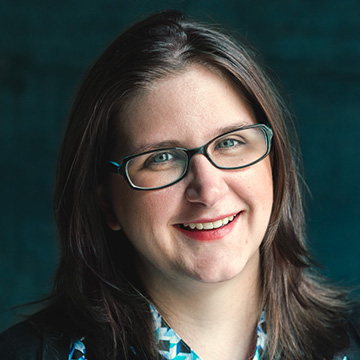
Jordan Hamessley is a literary agent at New Leaf Literary representing PB, MG, YA, and adult genre fiction. With nearly a decade of experience working on the editorial side of publishing at Penguin Young Readers (Grosset & Dunlap), Egmont USA, and Adaptive Studios, Jordan Hamessley made the switch to agenting. She is actively building a list of diverse children’s fiction from picture books through YA and select adult science fiction and horror authors. Jordan has a deep affection for contemporary middle grade and YA with heart and humor. She is always looking to find stories that bring the queer experience to the children’s space across all age ranges. In terms of genre, she is interested science fiction and horror. She is also looking for quirky, non-fiction picture books with a STEM focus.

*****


We have an official ChaBooCha keychain. These keychains are normally only given to ChaBooCha Regional Ambassadors (which reminds me: any RAs who are in their second year of being an RA, please let me know so I can send you your keychain), but, occasionally, I get to offer one as a prize during the challenge. If you are a signed-up member of the challenge, all you have to do to be entered into the random prize draw for this keychain is to comment on this blog post. The winner will be selected by a random number generator on March 31st.

Tuesday, 26 March 2019

Anatomy Of a Middle Grade Manuscript by Laurie Smollett Kutscera #ChaBooCha

Image by Mystic Art Design from Pixabay


ANATOMY OF A MIDDLE GRADE MANUSCRIPT


Lightning Strikes!

As a writer, you’ve probably experienced that moment when you’re involved in some unrelated task and you're suddenly overwhelmed by an idea with nothing to write on! I was sitting in a movie theatre watching the opening credits of a film - where these playing cards filled the screen. I was hypnotized by the faces of the King and Queen of Hearts. I felt them calling me. The next morning, I opened my laptop and began writing a story about a boy who discovers an animated deck of cards in his father’s old desk.

Best Laid Plans

I hadn’t planned on writing a middle grade book. I started out writing what I thought was a picture book. I even worked on a number of illustrations. But once the first draft was done, a dear friend, who was a librarian at a middle school, read it and suggested I consider revising for a middle grade audience. I knew very little about the genre and was grateful for her guidance. She suggested I read what has become one of my all-time favorite books: THE INCREDIBLE JOURNEY OF EDWARD TULANE, by Kate DiCamillo.


Read, Read, Read!

I immediately began reading as many books in the genre as I could get my hands on— more Kate DiCamillo, Neil Gaiman, Richard Peck, Jennifer L. Holm. I was moved by their heartfelt novels—each one so beautifully crafted. The more I read, the more I began to understand the age group. Their thirst for humor, adventure and authenticity, freed me to become more expressive in my own writing. And, so it began—I would craft a middle grade novel from my picture book draft.


Research

When I began writing MISADVENTURES OF A MAGICIAN'S SON, I knew right away certain aspects of my main character Alex would be similar to mine. He questions everything and can get lost in his own thoughts. We both lost a parent at a young age and both of us were bullied. I felt comfortable tapping into my own journey as an awkward 12-year-old to build his world. But Alex, who reluctantly follows in his father’s footsteps, is also a talented magician. On the subject of magic tricks, I knew very little, and needed to do some serious research.

While the internet offered helpful information, I felt strongly that I needed a one-on-one experience. Enter Joel, a young magician I spent quite a bit of time with. Pen in hand, I asked countless questions while he enthusiastically shuffled his cards, did flourishes and made them fly from one hand to the other. He described each maneuver while I scribbled notes and took plenty of photographs. I also shot video that I watched over and over which helped me translate the card tricks onto the written page.

As the novel progressed, I visited Joel on several occasions loaded with more and more questions. “Could Alex do this? What about a trick like this?” After a while, I realized what I was doing was basically asking permission. Joel helped me realize, when it came to magic, anything was possible!  This was a huge turning point for me. I had permission to take the story where it wanted to go.


Pulling It All Together

I had just completed a writing workshop at Media Bistro in NYC when I discovered they also offered a YA/MG writing-critique workshop. I immediately signed up! Led by a remarkable agent/author Kate McKean, the group of eight was filled with talented writers, screenwriters, playwrights and me! This was the real deal and quite honestly, I was a bit intimidated. But they were all so supportive and the feedback was spot-on. I learned how to build tension, flesh out characters and move the story forward. It still remains one of the best experiences I’ve ever unknowingly put myself into!


Edit, Edit, Edit.

By the time the critique workshop had come to an end, I had received written feedback from each member of the group on my entire manuscript–chapter by chapter–which I organized in separate folders. With the understanding that I needed to get the word count up around 35,000-40,000, I began another draft.

I found this stage to be the most cathartic. Deleting blocks of text for a concise sentence. Elaborating on an emotional moment. Heightening suspense by using short quick sentences. I was molding and reshaping the story like clay on armature.


Step Away.

This is some of the best advice I can share. After a few months of focusing on another project, I came back and was able to review what I had written with a fresh perspective.


Edit some more!

After another round of edits, a few minor changes were made and I was ready for submission.

MISADVENTURES OF A MAGICIAN’S SON became a personal adventure from picture book to middle grade novel that will soon be released by Blue Whale Press this coming Fall! 

 *****
Author/illustrator, Laurie Smollett Kutscera grew up in NYC’s Greenwich Village. She studied fine art and children’s book illustration at Queens College with Caldecott medalist Marvin Bileck. She is a published children’s book illustrator, an award-winning graphic designer and toy designer.
Her passion for writing began 14 years ago while cruising the eastern seaboard from Nantucket to the Virgin Islands. She is an active member of the SCBWI, 12x12 Picture Book Challenge and Children’s Book Academy.

Laurie lives on the north shore of Long Island with her husband Nick and rescue doggie, Cody. She and her husband own and operate an 85ft classic yacht for charter in NYC and Long Island Sound.

twitter:@lkutscera

*****


Give-away


Some of you already know that one of my (Becky's) hobbies is making jewellery and charm bookmarks. I like adding pretty charms to things, along with other jewellery-making ideas. today's prize is one of my charm-added bracelets. the bracelet itself looked small to me, so I had my 16 year old daughter (who is full-grown at 5'10" tall) try it on to make sure it would fit the average person. I've added a couple of fantasy charms to it and it is today's prize (pictured above). (Don't ask me what metal it is, as I am not sure. I tend to buy mostly silver-plated and stainless steel jewellery pieces and charms. I occasionally get actual sterling silver pieces in, but I don't keep track of which is what.) But it's a pretty bracelet that comes in a pretty jewellery bag, and you can keep it for yourself or give it as a gift to someone else.) If you are already a signed-up member of the challenge, all you have to do to be entered into the drawing for today's prize is comment on this blog post. (The photo doesn't really do the bracelet justice. It's more sparkly than it looks in the photo. I'm great at photographing people and places, but not so great at photographing items.)

Thursday, 24 March 2016

Characters You Crave to Know by C. Hope Clark #ChaBooCha


Characters You Crave to Know
by C. Hope Clark

Remember that character you fell in love with a long time ago? The one you wanted to be friends with, live with, maybe even marry? Without the author’s adept touch at developing that character, you might’ve skimmed over him, or skipped him when he spoke, or not read the book altogether.

Writing three-dimensional characters is intentional, not accidental, and you don’t just start writing in hope you make them appeal to a reader. So, what steps can you take to infuse color and style into your characters to make them memorable, and entice a reader to want more of your talent?

1)      Create a bible.
List your characters, each on a page or in his own column on a spreadsheet, and note every defining item you could imagine: height, weight, skin color, hair color, hair style, eye color, age, education, birthplace, parental relationship, marital status, hobbies, occupation, political affiliation, car, clothing preferences, dialect, religion, favorite food, favorite music, favorite movie, favorite color, shoe size, jewelry, and so on. Anything you’d want to know about a person you meet.

2)      Take that bible deeper.  
Take the description into their personality and history. What is their worst fear, second worst fear, biggest failure, biggest regret, missed opportunity, biggest success, scar, weakness, trength, habit, quirk, deepest dream or desire, type of friend preference, addiction, and so on.

3)      Interview the character.
Ask the character questions, then write his responses as he would actually speak in person. Don’t list his answers, but instead, act as if you are transcribing his words, to include his stuttering, cursing, uhs and ums, big words, choppy sentence, misuse of words, humor, sarcasm, machismo, flirtation, and body language. Here you are practicing writing his dialogue so that it comes natural later in the story. Ask him how he likes his steak cooked, or how would he react if he came home and his house was burgled? What does he think about his parents, or his boss at work? Think of everyday conversations and bounce them off your players, reaching for a wide range of reactions.

4)      Define his status.
Is your character a power figure, a peacemaker, or subservient (follower)? What makes your character three-dimensional is often in recognizing how they will change depending upon the situation they step into or the other players they encounter. A sixth grader amongst high schoolers acts entirely different than a sixth grader around other sixth graders, or around third graders. Personality shifts depending upon the people, places, and moments. Understand how your character would morph as situations alter.

5)      Master dialogue.
You already have a feel for your character’s speech patterns after interviewing him, but attempt to write your dialogue without tags. Tags are phrases like he said, she cried, they shouted. Instead, use beats as much as possible, showing the character’s actions, reactions, and foreshadowing. None of us speaks with reacting to our surroundings. Covering our eyes in the sun, talking over our shoulders, stroking a cheek, crossing our arms, pacing, fisting our hands. When you can write a dialogue between players without tags and still follow the conversation, you’re mastering your characters.

Check the following excerpt from Echoes of Edisto, my third book in the Edisto Island Mystery Series, coming out in August 2016. Note there’s only one tag in the entire excerpt yet you have no problem recognizing who speaks to whom.

“Callie?” Beverly caught her daughter in the hallway before Callie exited and reached the chief. “They’re leaving a mess on my doors,” she complained, pointing at the fingerprint technician.
Yes, let’s worry about smudges and ignore the crime. “No other option, Mother. They’ll take your prints as well, to rule them out of the ones they find. Just do as they ask. And can you bring me about three aspirin?”
Beverly held up her hands, flipping them over to analyze her nails.
“Jesus, Mother, they aren’t here to inspect your manicure.”
Beverly snatched her fingers closed. “I know that.”

Regardless the genius of your plot or elaborate scheme, if the characters don’t jump off the page, the story will fall flat. Plot does not drive the characters. Characters drive the plot. And most of the time a reader will thoroughly enjoy any tale . . . if the characters are remarkably entertaining. And you cannot make them entertaining unless you write them as if you’ve met them in person.

*****

C. Hope Clark writes mysteries in the rural South, preferably along the coastal Lowcountry of South Carolina. She has published two award-winning series, her most popular being the Edisto Island Mysteries. The most recent is Edisto Jinx, and the upcoming release is Echoes of Edisto, August 2016, by Bell Bridge Books. Hope also founded FundsforWriters.com, a resource aiding writers seeking to earn a living at their craft, chosen by Writer’s Digest for its 101 Best Websites for Writers for the past 15 years. Her weekly newsletter reaches 35,000 readers. She teaches at workshops, conferences, and libraries across the country. www.fundsforwriters.com / www.chopeclark.com

*****
Give-away


Today's prize is the book The Shy Writer Reborn: An Introverted Writer's Wake-up Call 
 by C. Hope Clark. If you are a signed-up member of ChaBooCha, all you need to do to be entered into the drawing for this book is comment on this blog post. Winners will be selected from a random number generator on March 31st at noon (GMT).

Saturday, 5 March 2016

ChaBooCha guest post line-up for 2016 #ChaBooCha


Guest post line-up for the Chapter Book Challenge 2016


Starting on March 7th, guest posts from the authors and editors listed below will be posted to the blog. I've given you a brief summary of the guest-posters credits here so you have an idea of what is to come. Some of the bios were sent in already, and the ones that haven't been sent in yet were created by taking bits and pieces about the authors from their Amazon author pages or from their web pages. Their official bios will be included in their guest posts. The list below is in no particular order and does not reflect the order in which the guest posts will be published. I can tell you that I have read at least one novel (sometimes more) or several short stories from each of the guests who will be posting, and, because of this, I am able to assure you of their talent and skill when it comes to the craft of writing.

*****
Yvonne Navarro lives in southern Arizona and is the author of twenty-two published novels and well over a hundred short stories. Her writing has won the HWA's Bram Stoker Award plus a number of other writing awards. Visit her at www.yvonnenavarro.com or on Facebook.

SASS is a group on Facebook that helps promote new Indie authors (those with less than 3k likes on their pages) and helps numerous authors whip their street teams into shape. They also run blog tours, cultivate reviewers, and do all things bookish (there’s even a member that makes book trailers). Oh, and they do it all pro-bono. Visit them on their Facebook page and on Twitter.

Nancy Holder is a five-time winner of the Bram Stoker Award from the Horror Writers Association. She has also received accolades from the American Library Association, the American Reading Association, the New York Public Library, and Romantic TimesShe and Debbie Viguié coauthored the New York Times best-selling Wicked series for Simon and Schuster.  They have continued their collaboration with the Crusade and the Wolf Springs Chronicles series, and are hard at work on a teen thriller. She is also the author of the young adult horror series, Possessions, for Razorbill. She has sold many novels and book projects set in the MTV Teen Wolf, Buffy the Vampire Slayer,Angel, Saving Grace, Hellboy, and Smallville universes. She has also sold approximately two hundred short stories and essays on writing and popular culture. Her anthology, Outsiders, was nominated for the Bram Stoker Award in 2005. She is an editor and writer of comic books, graphic novels, and pulp fiction for Moonstone Books, where much of her work centers around Sherlock Holmes. She writes a column for the Science Fiction and Fantasy Writers of America Bulletin. She also teaches in the Stonecoast MFA in Creative Writing Program, offered through the University of Southern Maine. 

C. Hope Clark is founder of FundsforWriters.com , a writer's resource awarded 101 Best Websites for Writers by Writer's Digest Magazine each year for over a decade. Her weekly publications reach 40,000 readers. She motivates and educates writers to step up, take charge, and create their careers. Her latest FFW release often discussed at conferences is The Shy Writer Reborn: An Introverted Writer's Wake-up CallShe's the author of The Carolina Slade Mystery Series, the first release entitled Lowcountry Bribe, by Bell Bridge Books. Tidewater Murder and Palmetto Poison released the following two years. Hope branched out with a new series in 2014 with Murder on Edisto, book one in The Edisto Island Series. Edisto Jinx came out in 2015 with the third in the series expected summer 2016. 

Miranda Kate is a freelance proofreader/editor, living as a British expat in Holland. She writes flash fiction and has stories in a variety of anthologies, including Once Upon a Time, 100 Doors to Madness, Twisted Tales 2015, and Spooky Tales. Miranda's most frequent genre of choice is horror.


Daniel Swensen is the author of Orison, a fascinating fantasy that follows a feisty young thief named Story. You can also find his short story Burn for free on Amazon.


Rose Pressey is a USA TODAY bestselling author. She enjoys writing quirky and fun novels with a paranormal twist. Her paranormal series include A Haunted Vintage Mystery Series, The Halloween LaVeau Series, the Maggie, PI Mysteries series, the Larue Donovan series, the Bayou Series, the Rylie Cruz Series, A Paranormal P.I. Mystery series, the Haunted Tour Guide Mystery series, A Haunted Renovation Mystery series, the Mystic Cafe Series, the Chase Charley Mystery series, the Hadley Wilds series, and the Trash-to-Treasure Crafting Mystery series. She can be found on Facebook

Joy Corcoran is a writer and artist who lives in Portland, Oregon and blogs about how the arts impact and improve our lives. She reviewed books for 12 years at WEVL Community Radio in Memphis. Joy has had stories published in various regional and literary magazines. She's worked with the Portland Storytellers Guild and the Oregon Women's Caucus for Art. She also worked with the Yuhuhugs team to help create The 12 Lessons for Greatness, stories for children and essays for parents on values.

Melissa Gijsbers is an Australian author of children’s books and flash fiction. She is a contributing author in all three Teapot Tales anthologies as well as a variety of other collective works. She was the first official regional ambassador for the Chapter Book Challenge (Melbourne group) and is a member of the SCBWI. Her first book for children, Swallow Me, NOW! was released in October 2014. Her book 52 Blog Post Ideas: Blogging for Authors came out in Summer 2015. You can find out more at www.melissagijsbers.com.

Monday, 30 March 2015

School Visits by Y. I. Lee #ChaBooCha


School Visits

I’ve been fortunate to have the privilege of going into local schools with my children’s book, "A Rat and A Ransom."

It’s so encouraging when the future generation enjoys reading. They are a delight to be with. In most instances, I would meet the children in their class room, but at the last school I visited, a week ago, we were in the school hall. There were children from three class rooms, averaging around sixty pupils. They filed into the hall and sat in front of me, on the floor.

I always love their excitement and enthusiasm. It can be a little daunting at first, to have so many expectant faces focused on you, but I’m used to it now and enjoy the experience.

The children had written down the questions they wanted to ask me, and considering the average age was nine, the questions were intelligent and sometimes challenging. They wanted to know about the publishing process, even editing, which came as a surprise - until the teacher explained that the children were doing their own writing and learning to edit. 

It thrills me when I hear children love to write, as well as reas - some budding authors for the future I think!

The question and answer session was great fun, but reading to them is my personal favourite. The fact that I’m reading from my own book makes it particularly special.

The children are so attentive, overawed I guess by the fact that an author is in their school and reading to them.

It’s a real privilege, to be trusted with such an amazing responsibility.

It’s not easy for an author to go into schools, these days. However, for any author wishing to do so, here are a few suggestions:

The easiest option, and the one I was able to take advantage of, is to approach a teacher’s assistant. I was fortunate to be close friends with two, both work in different schools, in my area. They each took a copy of the book and showed it to the head teacher.

The one school invited me in right away, and I spent one afternoon a week, for a month, reading to the children and answering any questions they might have. This was a particularly nice experience, as, over the month, I built a relationship with the children and their teacher.

At the end of my time there, I presented the school with a couple of free books for their library.

The school I visited recently were given a copy of my book, and, for quite some time, I heard nothing until my friend reminded the teacher.

We have to remember, teachers are extremely busy! She had no spare time to read the book, so gave it to one of her pupils to read.

He really enjoyed it, and to everyone’s surprise, he wrote a review, and a few days later I was invited to attend an afternoon session with the children.

I was so impressed with the pupil's review; I presented him with a mug, bearing the image of the book cover.

A photographer from the local paper came and took photos.

A child, who excels in reading and writing, is definitely news worthy.

It’s a good thing if local authors can go into schools. It encourages the children. They love to meet and talk to a real author, and I know from what the teachers have said…children are inspired to read more and try their hand at writing. So it’s a win, win situation.

I would encourage all authors to go into schools if they can.

Find someone who has contact with the school.

Give the school a copy of the book to look through. They will want to check it is suitable for their children to read.

Don’t harass them, but if you don’t hear anything for a while, get in touch through your contact working at the school, or if you don’t have one, pop in. Schools are busy places and they may well have forgotten.

Most times a personal approach works well.

Also, if you have a friend, whose children attend the school, you would like to visit, give them a copy of the book. The parent’s recommendation can open the door for you.

Then there are the school governors. If you know such a person, give them a copy and ask if they would read it, and if they think it is suitable, recommend it to the school.

And always offer some free copies of you book for the school library.

I hope what I’ve suggested is helpful. Getting authors into schools can only be a positive thing!

***** 

 About the Author


Y. I Lee genre is Y/A Fantasy. "The Shadowed Valley," her first book, was published in 2011, followed by "A Rat and a Ransom," published in  2012. Her third novel, "Through a Glass" was published in 2012 and the sequel "Through a Glass: Gathering Storm" was published in 2014. You can find her book on her Amazon author page.

*****  

Give-away


Y. I Lee has generously offered to donate a copy of her book "A Rat and a Ransom" as a prize for ChaBooCha members. If you are already signed up for the challenge, all you have to do to qualify for the drawing for the prize is to comment on this blog post. Be quick as the drawing will be done tomorrow, the 31st of March, at noon PST. Good luck!


Friday, 27 March 2015

Do It Yourself Publicity by Harold Underdown (excerpt from his book) #ChaBooCha


Do It Yourself Publicity

Nudge, Don't Push

There's a fine line between contributing constructively to the marketing and publicity of your book and harassing the publisher with your ideas. If you do have ideas, approach the publisher in a professional manner. The publicist for your book will want to know of any ideas you have regarding the publicity for your book, and many publicists ask authors to prepare a list of their publicity ideas. 
(Marketing departments may also send a detailed questionnaire. If you get one, fill it out thoroughly. Your publisher needs that information.)

After you offer your ideas, let go! Publicists, like your editors, live a harried and hectic workday. Your publicist does not want to hear your voice three times a day. Instead, politely extend your list of publicity ideas and wait to hear from the publicist. A follow-up call about two weeks after submitting your ideas, however, is okay.

I remember a story from an author at a conference who thought that planetariums might be really great places to publicize her children's book about stars and constellations. The author went down to her local library and researched all the planetariums and natural history museums in the nation--about 2,000 in all. She took the list to her publisher, who put together a pamphlet about her book (and a few others) and sent out a mailing to the entire list. The mailing was a big success for the publisher and the sales of the book.

This author simply provided the publishing house with the tools necessary to act on an idea. Although the author put in hours of work--researching all the addresses and locations of planetariums and natural history museums--the work paid off.

Now let's pretend that the author suggested sending a pamphlet to planetariums but didn't do anything more. Would the publicist have had time to sit down and research the mailing list? No--he had his hands full getting information about this season's 50 books out to the standard media sources. By going that extra mile for the publicist, the author helped that publicity idea come to fruition.


Class Rules 
Publicists know that the best resource in a book's publicity campaign is the author or illustrator. Oftentimes, the author taps into a creative tie to the book that yields a huge response from the public. It behooves you and the publicist to work in unison. So get to know your publicist and give him your ideas--just don't bother the publicist with a million phone calls to share trivial ideas.
 Or let's say the author had told the publicist the great idea, did not create the list, and then called the publicist every day to see if a pamphlet had been designed and sent out. How would you react if someone did this to you? More than likely, the publicist would have erased the messages on voicemail as soon as she recognized the author's voice. Don't let this happen to you! Nudge, don't push, and be ready to roll up your sleeves and help.


Lend a Helping Pen


Want to know a great way to move along a productive publicity campaign? Offer to write the press materials for the publicist. A publicist doesn't have unlimited time to devote to your book and may only be able to send it to a standard review list. If you want a wider campaign, offer to help. If you create the materials for the press kit, the time the publicist didn't have to spend on the kit can instead be used on your campaign.

Definition 
A press kit is a folder of materials about your book sent to the media--newspapers, radio and television stations, journalists, magazines--to alert them to your book's release. The best press kits link the book to a newsworthy item or a hook. A clip is a copy of an article you've written or has been written about you or your book.
 Follow these steps when approaching your publicist or marketing manager about your ideas. Make an initial phone call and politely say, "Hi, I'm __________, the author of _____________________. I'd like to help you in any way I can and actually have some publicity ideas. Where might I send them?" If you feel comfortable offering to write the press materials, do it. Put together a packet of clips, your ideas, and any press materials you've written and mail them to the publicist. Keep in mind that you can use the materials if the publicist doesn't. Wait a few weeks before calling. Give the publicist a chance to look over the materials. Don't bug the publicist. I said that before, didn't I? Let me say it again: don't bug the publicist. If it appears that your ideas won't be implemented, start using them yourself.


Here are several possible items to include in your press kit:

A press release or new book release announces the publication of your book, briefly describes it, and contains contact information. If something about the book connects to some current event or hot issue, the release can touch on the newsworthy aspect of your book.

Author and illustrator biographies, typically one page, detail your life and publishing career. Who better to write this than you?

The press kit may contain clippings from previous articles written about your book or you in a magazine such as Booklist or Publishers Weekly--especially if your book received an outstanding review.

Can You Keep a Secret? 
If you prepare elements for a press kit, save everything on your computer and send the files to the publicist. That way, your publicist will be able to quickly make corrections or edit the documents.
 Written like an article, a mini-feature actually contains much of the same information as the press release, just in a different format. Because it's actually an article, publications may publish it directly.
If your book can spawn a demonstration that might prove of interest to a talk show, say what you could do with suggested show or event ideas. If your book shows kids how to care for pets, for example, outline what you could do in a short segment on a show.

If a journalist becomes intrigued by your book, the more work you can have ready for the journalist, the better chance the writer will do the story. Suggested interview questions can be a great help to get you interviewed.

"I Did It My Way"

Frank Sinatra crooned it in his tune "My Way." Once you learn where your publicist's efforts end, you then need to decide how much of "your way" needs to be implemented. Essentially, how much time and energy do you want to devote to publicizing and fueling sales of your book? If you want to self-publicize, take a look at what you need to do.

In the end, you might decide to let the marketing department handle everything. They know their business, and even if they don't do everything you wish they would, they'll do what in their professional judgement is likely to pay off. So self-publicize by all means, but don't feel that what you do will make or break your book.


Playground Stories 
Don't spend too much time on your campaign. Bruce Balan offers this comment: "I spent many years becoming quite well-versed in self-promotion. I've been interviewed by scores of magazines, radio programs, and newspapers. I've created brochures, flyers, and review sheets. I've sent mailings to bookstores. I've spent money to hire a publicist. I've thrown publication parties. I've traveled to, and spoken at, conferences, trade shows, schools, and seminars. And I've come to a few conclusions:
- If your publisher is not supportive of your book, it probably doesn't matter what you do. 
- Even if your publisher is supportive of your book, there are no guarantees of success. 
- The authors I most admire are those who write well. Not those who promote well.
You Gotta Have an Angle


To publicize a book, even a children's book, you need an angle. You need to make your book stand out in a crowd of hundreds of titles--both in the stores and for the media. Remember, the media offers information to readers and viewers. In the case of television, the reporters also need to show something. Conversations with authors are just okay, but it's better if you can "do" something. For a news program to generate a story, they need a news angle--or at least a human interest angle. So your first step in publicizing your title is conceptualizing a hook or an angle.

What's a hook? Let's look at some examples. Say you've written a how-to garden and plant book for kids. A huge storm sweeps through your town, destroying gardens and felling trees. Your angle could be the rebuilding of gardens, teaching kids how to help in the recovery process. Nonfiction can be easier than fiction, but say your picture book details the story of a little boy moving from the neighborhood he's lived in from birth to a new neighborhood and new school, a classic theme, and yet you can find a hook. Find out the statistics on children changing schools and the psychological impact. Offer tips in your press packet for acclimating to a new school. Hook adults into buying the book to help their children; the media will want to offer this "good" information to parents.

Be creative! How can you hook people and get them interested in your book?

Roll the Presses

So you've got a press kit and a press release. What are you going to do with them? Your first stop on the self-publicizing train is your local media. Because you live someplace and wrote a book, you're news. Whether you live in a town or out in the country, try the local papers, radio stations, and TV stations. If you live in a big city, don't expect the major newspapers to be interested (although it certainly doesn't hurt to try The New York Times, the Chicago Tribune, or the San Francisco Chronicle). Go for the neighborhood papers, the free monthlies for parents, the local cable TV show, and so on. Where do you get your local news? Go there! Fire off those releases you've written to the local media.

Can You Keep a Secret? 
Susan Raab, children's books marketing consultant, has a fantastic archive of her "To Market" column at http://www.raabassociates.com/to-market-advice. Elsewhere on her site, you'll find information on her book An Author's Guide to Children's Book Promotion (which illustrators will find useful, too).
 After you've sent your releases and kits to the local media, concentrate on bigger media outlets--but in many cases only if you can accommodate an interview or plan on traveling in the area. Let's look a little more closely at your publicity options.


Any newspaper outside your area will want one of two things--a news link or an appearance in their town. Contact the feature editor if the angle you have involves a trend or a news item. Contact the children's book review editor if you plan on a signing or an appearance some place.

Radio programs can call you and conduct live or taped interviews over the phone. Find a media directory in your local library or online and go through the listing of shows by content. If your children's book focuses on sports fitness for children, pitch yourself as an interview on the morning sports show. Producers of talk radio continually scramble to fill their airtime with interesting and informational interviews. Don't limit yourself to approaching only the book shows. Generally, these shows deal with weighty adult books anyway.

Class Rules 
Author tours are expensive, and children's publishers don't pay for them. Unless you have money to burn, don't put yourself on a six-city tour across the nation. Certainly, if business takes you to Boston for a week and time permits, contact the media about appearances. Otherwise, save the travel for a vacation some place fun!
 For television, look locally and anywhere you might be traveling. Television programs need to show their viewers something--why not you? You'll still need an informational or newsworthy hook for the appearance. I've given examples of hooks tied to specific book subjects, but you can make yourself the hook. For example, until he got to be known as an illustrator, David Wisniewski got more attention from having gone to clown school than from having created a beautiful book.


Self-publicizing can be a full-time job, or you might decide to skip it completely. Consider your options. Whatever you decide to do, connect your efforts to any bookstore events you do--a way to get attention for your book on its own, but also a way to support your publicity efforts.  Keep your publisher informed too.

*****


This is copyrighted material, displayed on the Chapter Book Challenge website for promotional and publicity use; may be downloaded, printed, or saved by individuals for personal use but may not be distributed or sold. This material belongs to Harold Underdown. More information can be found at http://www.underdown.org/cig.htm.

*****

About the Author


Harold Underdown is an independent editor and publishing consultant; he does critiques, helps to develop manuscripts, and provides other editorial and consulting services for individuals and publishers.

As an in-house editor, he worked at Macmillan, Orchard, and Charlesbridge, and has experience in trade and educational publishing.

Harold enjoys teaching, and in that role wrote The Complete Idiot's Guide to Children's Book Publishing, now in its third edition. He founded and runs "The Purple Crayon," a respected web site with information about the children's publishing world at http://www.underdown.org/

He also speaks and gives workshops through the Highlights Foundation, SCBWI's national and regional conferences, and Kid’s Book Revisions (offering online and on-site tutorials, webinars, and workshops in partnership with Eileen Robinson): http://www.kidsbookrevisions.com/.
*****


Give-away


Today's prize is a copy of "The Complete Idiot's Guide to Children's Book Publishing" by Harold Underdown. If you are already signed-up for the challenge, all you have to do to enter into the drawing to win this book is to leave a comment on this blog post. The winner will be chosen by a random number generator on March 31st at noon and will be announced later that day.